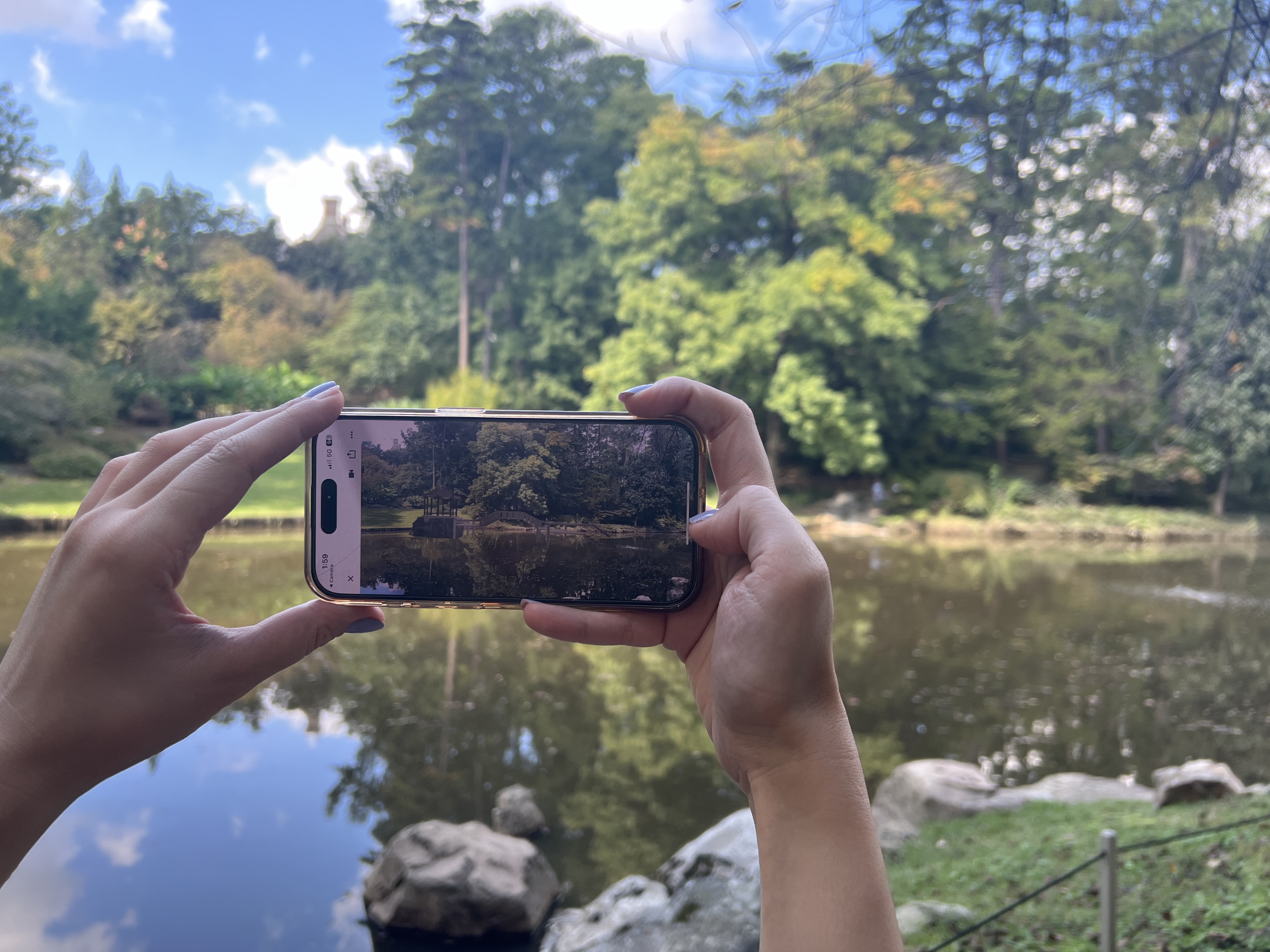
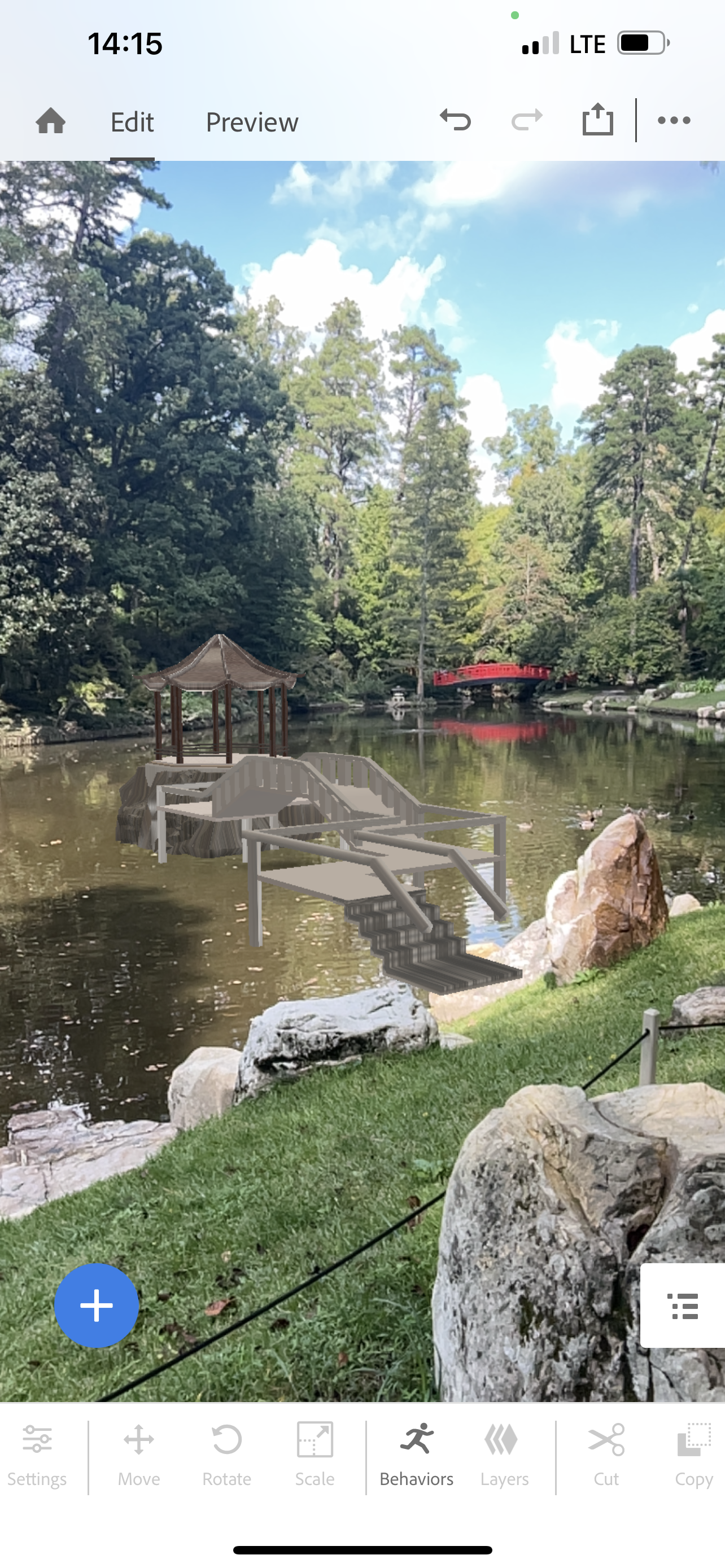
Inspired by the Asiatic Arboretum at Duke Gardens, which predominantly features Japanese influences, this project aims to create a more balanced representation of Asian culture by incorporating authentic Chinese architectural elements. The addition of a zigzag stone bridge and a polygonal pavilion introduces a contrasting yet complementary vision of Chinese architecture, often underrepresented in the space.
The design incorporates a Chinese-style bridge placed parallel to the iconic red wooden bridge, offering a meaningful juxtaposition that highlights the unique cultural symbolism of each structure. Created using Maya and presented through an augmented reality (AR) experience via Adobe Aero, the installation allows users to interact with the space in real time. As users reach a designated spot and place their anchor, the stairs, stone bridge, and pavilion gradually appear on their phone screens, simulating the process of integrating architectural elements into the natural landscape.
This sequential reveal not only emphasizes the presence of Chinese heritage but also invites reflection on how cultural symbols shape our perception of place. By contrasting the Chinese bridge with the Japanese red bridge, the project fosters deeper contemplation about cultural representation and the visual dynamics of mixed heritage.
In place
A bridge appears in the landscape.
The digital pavilion and bridge are anchored into the garden so their appearance unfolds from the visitor's physical point of view.
Experience the work
Open the AR experience.
Use a supported device to scan the Adobe Aero code and view Parallel Bridges in the garden.